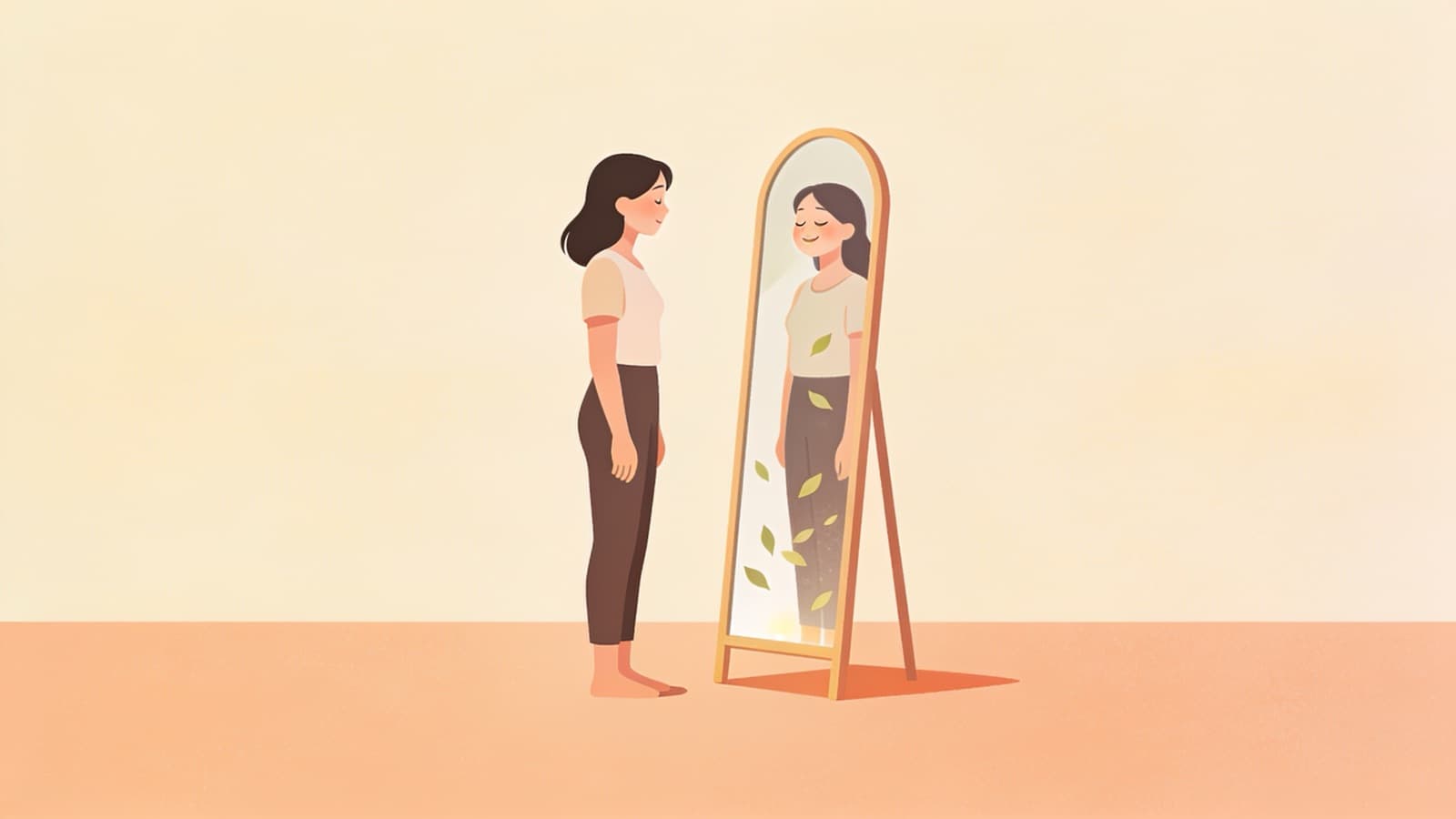

Every meaningful change — a better career decision, a calmer response to conflict, a habit that finally sticks — starts with seeing yourself accurately. That is self-awareness: knowing your patterns, emotions, strengths, and blind spots well enough to work with them rather than be run by them.
The frustrating part is that most advice stops at 'reflect more'. But research on self-awareness consistently shows that people who merely introspect a lot are not more self-aware — sometimes they are less, because unstructured rumination mostly generates plausible stories rather than truth. What builds real self-awareness is structured reflection plus outside input. Here are seven practices that do both.
1. Ask 'what', not 'why'
'Why did I react like that?' invites your brain to invent a flattering explanation. 'What was I feeling right before I snapped? What was at stake for me?' produces observations you can actually use. Swapping why-questions for what-questions is the single highest-leverage change you can make to how you reflect.
2. Keep a trigger log, not a diary
Instead of journalling everything, record just the moments that hooked you: what happened, what you felt in your body, what you did next. After two weeks you will have something no amount of introspection produces — data. Patterns jump out: the same person, the same kind of feedback, the same time of day.
3. Name your emotions precisely
'Stressed' is a label that hides more than it reveals. Is it overwhelmed, resentful, anxious, or bored? Psychologists call this emotional granularity, and it is trainable: each time you catch a feeling, push one level more specific. Precise names lead to precise responses — resentment needs a boundary, anxiety needs information, boredom needs a challenge.
4. Collect outside views — deliberately
You cannot see your own blind spots by definition. Ask three people who know you in different contexts one question: 'What is one thing I do that I probably don't notice?' Then just say thank you — no defending, no explaining. The overlap between their answers is a map of your blind spots.
5. Use a structured profile
Good assessments give you vocabulary for things you have always felt but never named. The point is not the label — it is that a shared language lets you observe yourself in real time: 'ah, my Chameleon is reading the room again instead of speaking'. We built the Selves Profile for exactly this: mapping the distinct inner 'selves' that drive how you decide, lead, and respond under pressure.
See how the profile works and what you receive. Explore Selves Profiling →
6. Watch yourself under pressure
Your calm self is not your whole self. The most revealing data comes from the compressed moments — deadlines, conflict, being caught off guard. Afterwards, run the what-questions: what did I protect? what did I avoid? who did I become for those five minutes? Pressure does not build character so much as reveal it, and revelation is exactly what you are after.
Unstructured introspection produces stories. Structured reflection plus outside input produces insight.
7. Practise in community
Self-awareness grows fastest in honest company — people who will reflect back what they see and let you do the same for them. That is why group workshops move people so quickly: hearing someone else name their pattern out loud gives you permission, and language, to recognise your own.
Start small: pick two of these practices and run them for a month. Self-awareness is not a personality trait some people are born with. It is a skill — and like any skill, it compounds.
If a guided setting suits you better, our workshops build these skills in a structured, supportive group. Browse SELF workshops →
Struggling with patterns that undermine your goals? Read: How to stop self-sabotaging →
Connect with us
Let's work together.
Interested in joining SELF? We welcome individuals and organizations eager to support our mission. Let's unlock human potential, together.