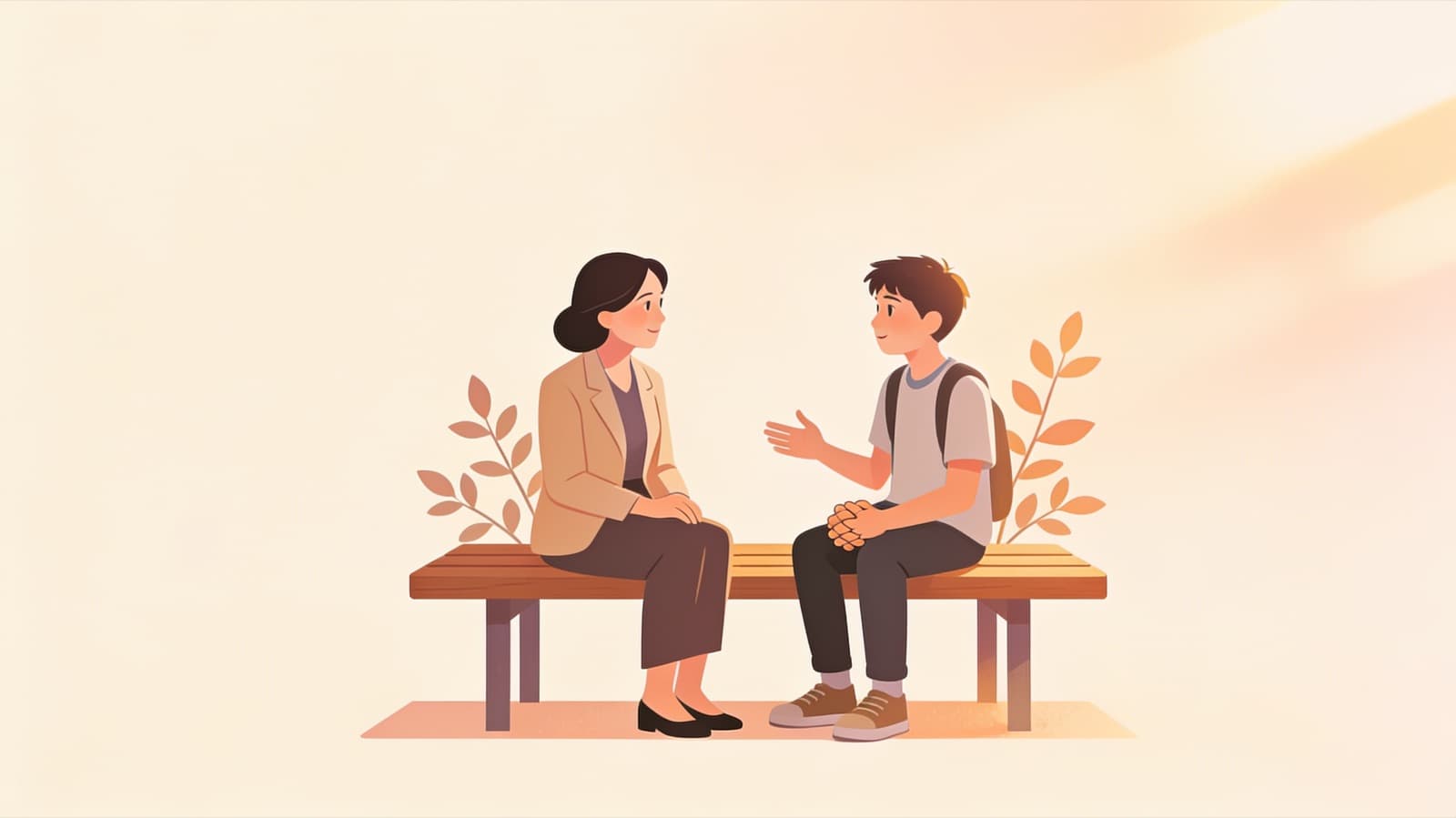

Ask adults who beat difficult odds what made the difference, and the answer is rarely a programme. It is almost always a person — a teacher, a coach, an aunt, a youth worker — one adult who showed up consistently and saw something in them before they could see it themselves.
That is the heart of youth mentoring, and it is one of the best-evidenced interventions in youth development. This guide covers why mentoring works, what separates good mentoring from well-intentioned advice-giving, and how the ecosystem looks in Singapore for anyone who wants to get involved.
Why one steady adult changes a trajectory
Adolescence is when young people work out who they are — and they do it by borrowing perspectives from the people around them. A young person whose available mirrors are stressed parents, grades, and social media gets a distorted picture of their own worth. A mentor adds a different mirror: an adult with no agenda, who keeps showing up, and whose picture of them is bigger than their worst week.
Decades of research on mentoring programmes point to the same conclusions: consistent, long-term mentoring relationships are linked with better school engagement, better mental wellbeing, healthier relationships with other adults, and fewer risky behaviours. The operative word is consistent — a mentor who disappears after two months can do more harm than no mentor at all, because it confirms exactly the story many young people already carry: adults leave.
Young people do not remember most of what mentors said. They remember that someone kept showing up.
What great mentors actually do
- Listen far more than they advise. The mentor's job is to help a young person hear their own thinking, not to install the mentor's.
- Hold judgment. The moment a young person feels evaluated, the honest conversation ends — and the honest conversation is the whole point.
- Stay through the boring middle. Trust is built in the unremarkable weeks, not the breakthrough moments.
- Ask about the person, not just the problem. School and behaviour are symptoms; identity, belonging, and hope are the levers.
- Know their limits. Great mentors are not therapists — they notice when a young person needs professional support and help them get there.
The self-awareness layer most mentoring misses
Here is what we have learned from years of youth work in Singapore: mentoring transforms fastest when young people get language for their inner world. A teenager who can say 'my inner critic is loud today' or 'I adapt so much I lose myself' can finally talk about what is actually happening — and a mentor can meet them there. That is why our youth programmes pair relationships with structured self-discovery, helping young people map their own patterns, strengths, and struggles instead of being defined by their circumstances.
Getting involved in Singapore
Singapore's youth sector has room for every level of commitment: volunteer mentoring through community organisations and self-help groups, school-based befriending, and structured programmes run by youth charities. If you work with young people professionally — as a teacher, social worker, or youth worker — the highest-leverage upgrade is usually training in facilitation and self-awareness work, so every conversation you already have goes deeper.
See how we train youth workers and run self-discovery programmes for young people. Explore our Youth Work →
Working with young people inside schools? Read: SEL in Singapore schools →
Connect with us
Let's work together.
Interested in joining SELF? We welcome individuals and organizations eager to support our mission. Let's unlock human potential, together.