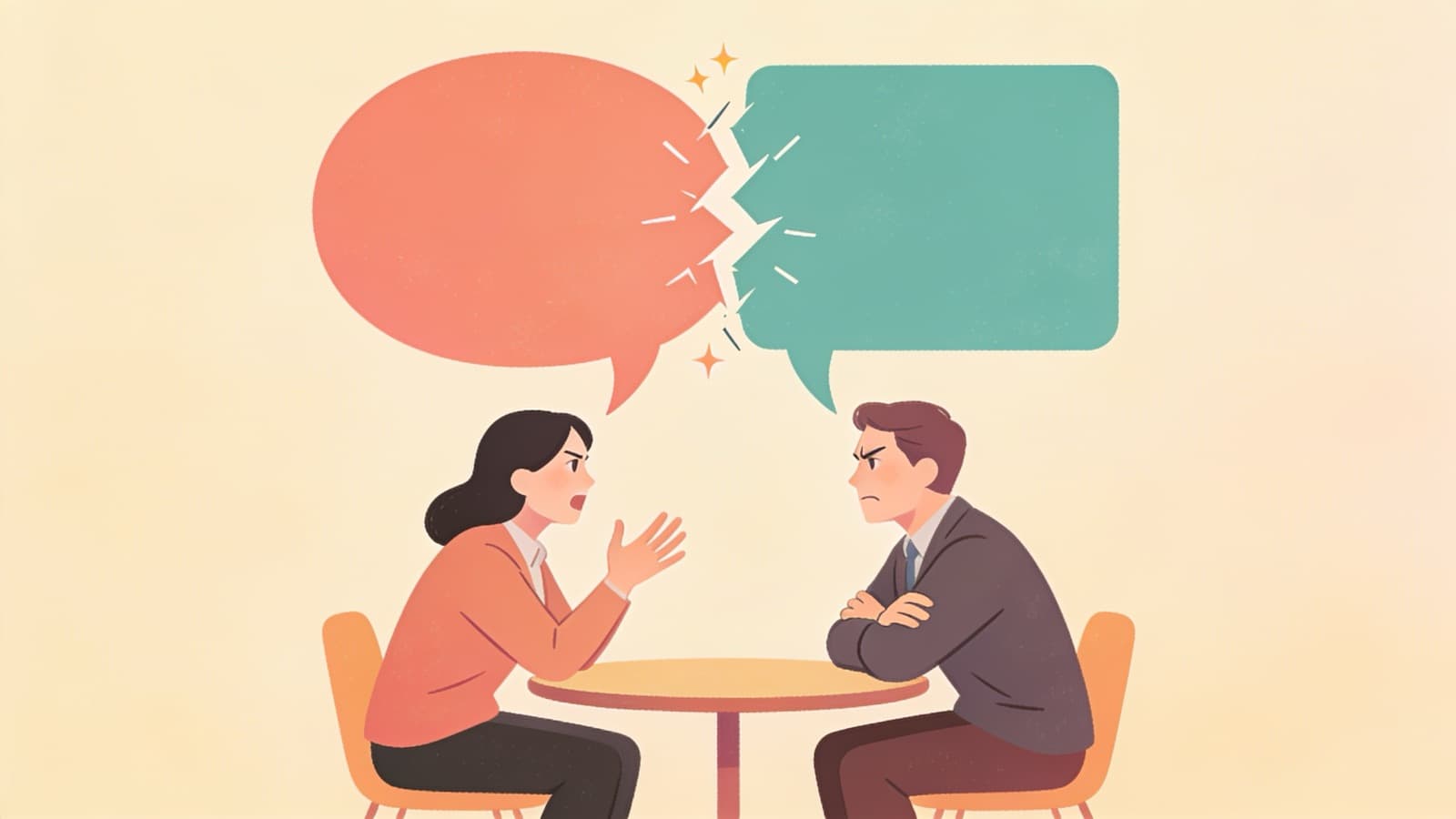

Every team has its rerun. The argument about whether the plan is ready or being overthought. The one about why nobody flagged the risk earlier. The one where half the room wants to move fast and the other half wants to move right. The names and projects change; the script does not.
Here is the pattern we see across years of running team workshops in Singapore: recurring conflicts are almost never about the topic being argued. They are about two different inner operating systems reading the same situation in incompatible ways — with no shared language to notice it happening.
The same fight, translated
Run the classic reruns through a working-styles lens and they stop looking like personality clashes:
- 'You're too negative' vs 'you're reckless' — one person's inner protector scans for what could go wrong; a change-driver treats caution as brake-pulling. Both are trying to make the project succeed.
- 'Decide already' vs 'we haven't thought this through' — a mover needs momentum to feel safe; an analyst needs understanding. Each experiences the other as the risk.
- 'Nobody tells me anything' vs 'you'd have said no' — a stability-keeper wants alignment before action; a transformer routes around friction. Cue the 'you never told me' rerun.
- The silent conflict — the adapter who agrees in every meeting and quietly disagrees after it. Not dishonesty: a Self that learned harmony is survival.
Teams do not have one conflict twenty times. They have one translation failure, twenty topics.
Why talking about the topic never fixes it
Most conflict resolution happens at the level of the topic — we compromise on this deadline, this process, this decision. The topic resolves; the collision course does not, because nobody named the actual difference: how each person decides, what each person needs to feel safe committing, what pressure does to each of them. So the same two styles meet again on the next topic, and the rerun airs again.
The fix is a level down: giving the team language for those differences. When 'Mei always blocks new ideas' becomes 'Mei's anchor self needs a day to sit with a proposal — give it to her and she becomes your best stress-tester', the conflict turns into information. Nothing about Mei changed. Everything about the conversation did.
What a team can do this month
- Name your reruns. As a team, list your three recurring arguments — most teams can within minutes, with laughter of recognition.
- Ask the style question. For each rerun: what does each side need to feel safe saying yes? Speed? Detail? Warning time? A chance to disagree in private first?
- Write micro-agreements. 'Proposals go out a day before the decision meeting.' 'Concerns get raised in the room, not after it.' Small, specific, honoured.
- Check on the quiet ones. The most expensive conflict is the one that never surfaces — ask your adapters directly, privately, what they actually think.
- Get the profiles on the table. A structured working-styles profile turns all of this from guesswork into a map the whole team can see.
Where a workshop helps
You can do real work with the steps above. Where a facilitated session earns its keep is the conversation a team cannot safely have by itself — the honest one about how its members actually experience each other. In our Selves at Work workshop, everyone completes a Selves Profile, the team sees the full picture side by side, and the reruns get named and re-written with a facilitator holding the room.
See how Selves at Work and our other team sessions run. Explore our corporate workshops →
Want the framework behind the working styles? Read: Meet your eight Selves →
Connect with us
Let's work together.
Interested in joining SELF? We welcome individuals and organizations eager to support our mission. Let's unlock human potential, together.